Portage Bay House
Seattle, WA
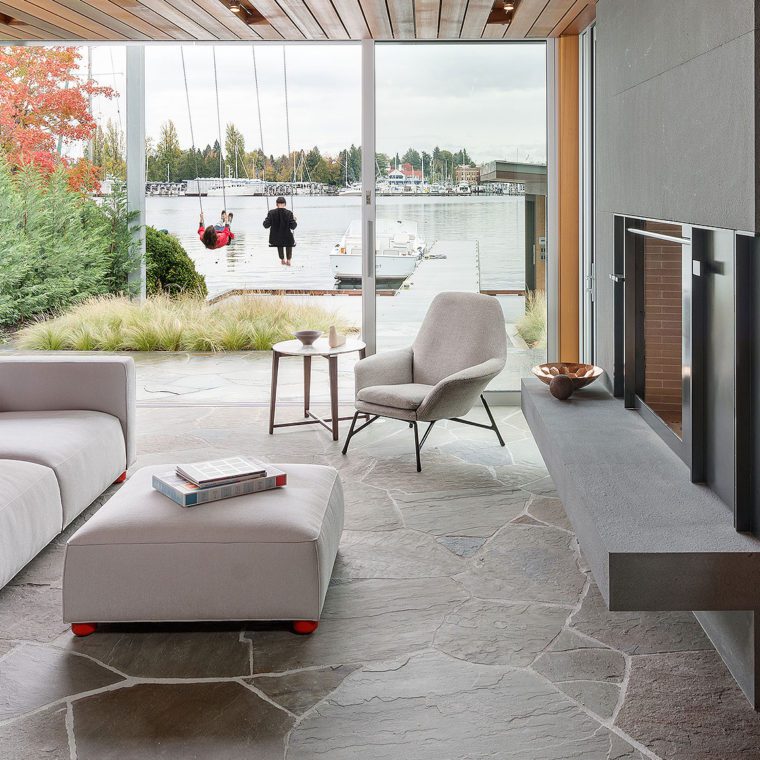
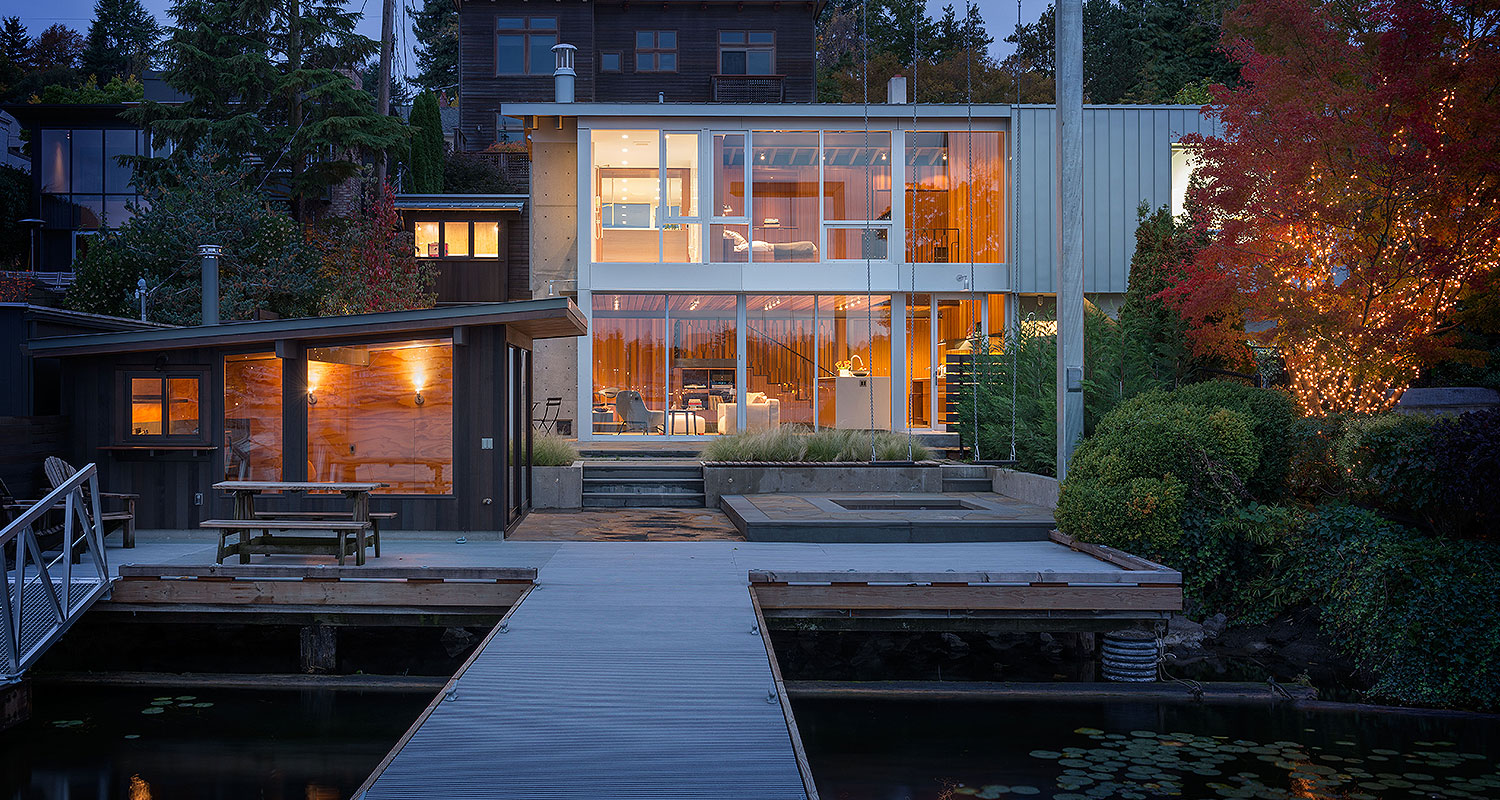
Sited along the water’s edge, the Portage Bay residence is designed as a compact, quiet refuge with direct access to the lake and a place to park the homeowner’s float plane. The house, designed by Heliotrope Architects as a refined interpretation of the maritime industrial sheds found along Seattle’s working waterfront, presents a protective zinc and aluminum exterior toward the street. On the water side, the building opens up, offering expansive views over the Portage Bay houseboats, the University of Washington, and the Cascade Mountains.
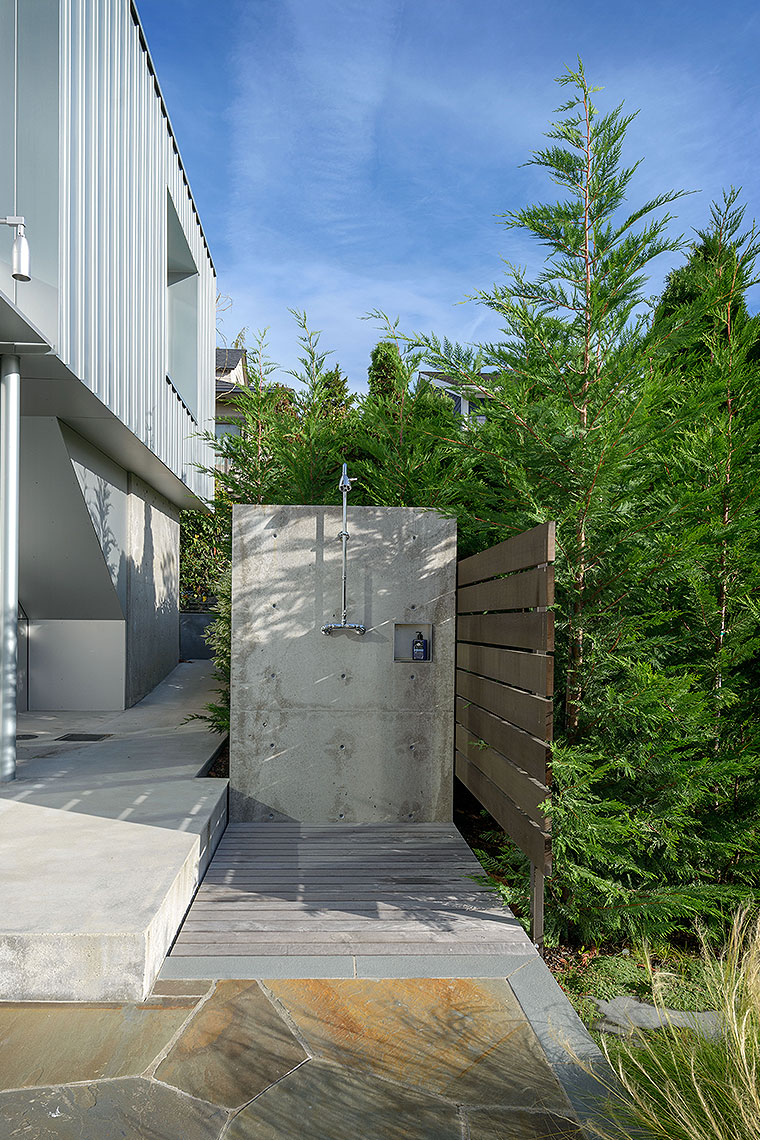
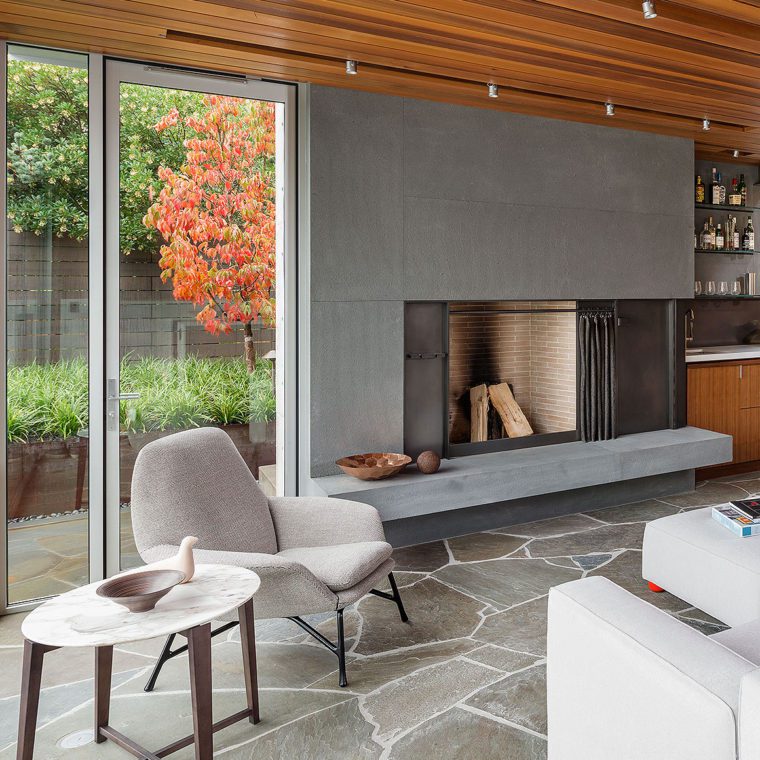
The landscape follows this approach: restrained in intervention, and responsive to the architectural clarity. The landscape features carefully arranged plantings including grasses, groundcovers, and a specimen dogwood, that frame interior views and soften the compact site. Planting around the outdoor shower provides subtle visual screening, and a metal planter wall aligns with the building’s material palette.
Though modest in scale, this project demonstrates how minimal intervention, when well considered, can contribute meaningfully to the architectural and experiential quality of a site.
Seattle, WA
Sited along the water’s edge, the Portage Bay residence is designed as a compact, quiet refuge with direct access to the lake and a place to park the homeowner’s float plane. The house, designed by Heliotrope Architects as a refined interpretation of the maritime industrial sheds found along Seattle’s working waterfront, presents a protective zinc and aluminum exterior toward the street. On the water side, the building opens up, offering expansive views over the Portage Bay houseboats, the University of Washington, and the Cascade Mountains.
The landscape follows this approach: restrained in intervention, and responsive to the architectural clarity. The landscape features carefully arranged plantings including grasses, groundcovers, and a specimen dogwood, that frame interior views and soften the compact site. Planting around the outdoor shower provides subtle visual screening, and a metal planter wall aligns with the building’s material palette.
Though modest in scale, this project demonstrates how minimal intervention, when well considered, can contribute meaningfully to the architectural and experiential quality of a site.