Integrating Composting into Our Work
Let's Talk Organics Management
Let's Talk Organics Management
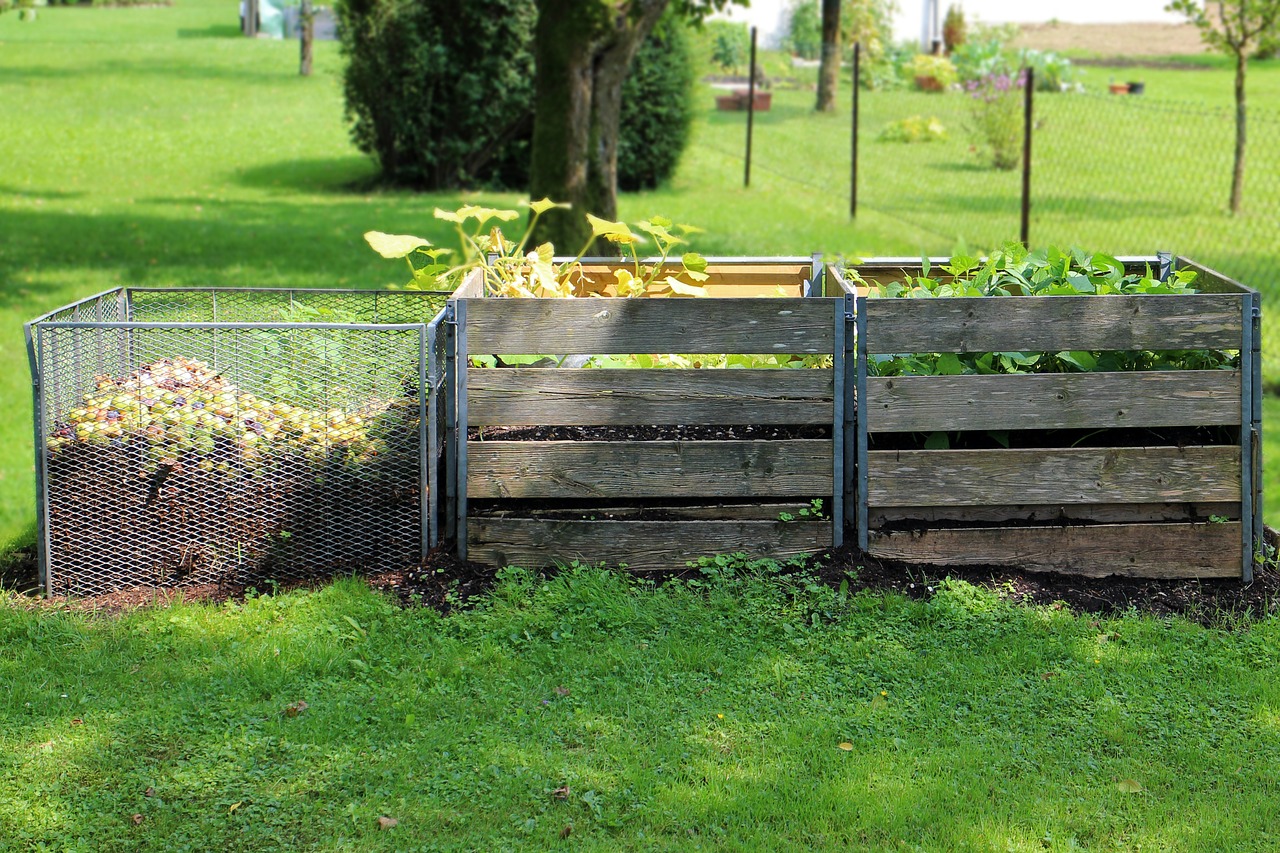
In recent years, Berger Partnership has been exploring how the systems we design—soil, planting, stormwater—can take a more active role in climate action. We’ve found that composting is an overlooked source of potential impact. Though often viewed as operational or programmatic, composting is directly tied to two of the most urgent climate concerns: greenhouse gas reduction and soil regeneration.
Composting became a central conversation as part of our work with the Everett Housing Authority’s (EHA) Park District development, where climate performance was a core goal. We began with a question: how could we keep organic waste generated on site—from both residents and landscape maintenance—out of the landfill and in circulation as a soil resource?
The climate case for composting is well-established. When food and yard waste decompose in anaerobic landfill environments, they release methane—a greenhouse gas estimated to be 80 times more potent than carbon dioxide over a 20-year period. While methane dissipates more quickly than CO?, reducing it can have an immediate impact. Project Drawdown lists food waste reduction and composting among the most effective climate actions available globally. Composting also produces a usable, local soil amendment that reduces the need for manufactured or transported inputs—an ecological and economic benefit for any project that includes plantings or gardens.
In Everett, we researched municipal composting infrastructure and learned that, under Washington State’s new organics management law, the project would need to accommodate basic composting bins. But we saw potential to go further. Working with the client, we proposed a closed-loop system: collecting food scraps and yard waste on site, processing it through a small-scale composting facility, and using the finished compost to enrich soils in the landscape and the project’s community garden.
To support this goal, we integrated composting bins into the building layout at the schematic design phase—an early, simple intervention that ensures composting is logistically feasible. We also studied operational precedents, including Seattle University’s on-site composting program, to understand staff needs, processing volume, and infrastructure. Although implementation of a full composting facility remains open-ended, the team intentionally designed for future adaptability. With cultural and financial support, such systems could scale to become operational—and even self-sustaining.
This kind of design work isn’t standard on most projects—especially not affordable housing. But we see it as an essential evolution in practice. Composting intersects with multiple core concerns in landscape architecture: carbon emissions, resource loops, urban soil health, food security, and long-term land stewardship. It offers a tangible, site-based intervention that connects global climate goals to everyday resident experience. And because compost is inherently tied to soil systems, its benefits compound—improving plant vitality, supporting stormwater performance, and reducing heat island effect over time.
Our work on composting as a metric for project success reinforces a broader belief: if a project values sustainability, composting—or some form of organic waste recovery—should be considered a baseline design move. When applied at the right time in the design process, these systems are efficient and practical integrations that will optimize the way we use and maintain landscapes.